PADOVA CITY GUIDE—ART, INTELLECT, AND A CITY COMFORTABLE WITH ITSELF
Padova is not a destination that announces itself. It doesn’t need to. Long before Venice learned how to stage beauty, Padova was building systems—of learning, of governance, of art—that still hold. The result is a city that feels less curated than lived-in, less theatrical than precise.
This is a place shaped by its university as much as its basilicas. Ideas have moved through Padova for centuries, often quietly, often ahead of their time. Giotto’s frescoes at the Scrovegni Chapel are the obvious proof, but the deeper impression comes from the city’s rhythm—measured, rational, and unapologetically local.
Travelers often arrive as a day trip. That’s a mistake, though an understandable one. Padova rewards staying put. Its pleasures aren’t stacked for easy consumption; they reveal themselves through repetition—walking the same streets at different hours, noticing how the city uses space, watching students and retirees share the same cafés without fuss.
If Venice is about spectacle and Verona about narrative, Padova is about continuity. It’s a city that assumes you’ll meet it halfway—and behaves better when you do.
ACTIVITIES & EXPERIENCES
SCROVEGNI CHAPEL
Giotto’s frescoes don’t overwhelm you—they reorganize you. The scenes unfold with a human logic that still feels unexpectedly current, and the color—especially the blues—does narrative work rather than decorative duty.
The timed entry helps more than it hinders. You’re given a short, concentrated window to pay attention, which is exactly what this space asks for. Think of it less as sightseeing and more as sitting in on a conversation that quietly changed how Western painting thinks.
BASILICA DI SANT’ANTONIO
The Basilica of Saint Anthony is not subtle, and it doesn’t try to be. Pilgrims arrive with purpose, locals move through with familiarity, and the building absorbs both without comment.
Architecturally, it’s a composite—Byzantine, Gothic, Romanesque—assembled over time rather than designed for coherence. That layered quality is part of the experience. Even if Saint Anthony means nothing to you, the basilica remains active rather than ceremonial, shaped by use as much as belief.
Visit during the day, when the flow of people gives the space its proper context.
THE UNIVERSITY PRESENCE
Padova’s university isn’t something you tour. It’s something you feel. Founded in 1222, it continues to shape the city’s scale, tempo, and social habits without ever turning itself into a display.
Spend time in the historic center and you’ll notice the difference—bookshops instead of boutiques, cafés that tolerate long conversations, a population that seems more interested in ideas than impressions. This is Padova at its most natural and most persuasive.
PRATO DELLA VALLE
Prato della Valle is generous, slightly odd, and deeply unbothered by whether you find it picturesque. Locals walk loops, run errands, and meet without ceremony, using the space exactly as it was intended.
Visit once during the day and again in the evening. The repetition matters. It’s how you start to understand Padova not as a destination, but as a place that belongs to itself.
ORTO BOTANICO DI PADOVA
The world’s oldest academic botanical garden is less about spectacle than continuity. Founded in 1545, it still functions as a working space for study, which keeps it from feeling precious.
The older circular garden is the anchor, but the newer sections matter too—they show how Padova thinks about preservation as a living practice rather than a finished achievement. It’s calm, instructive, and quietly satisfying, especially between heavier cultural stops.
CIVIC SPACES AND DAILY LIFE
Padova’s strength shows up in how its public spaces are used. Markets, cafés, and broad squares operate without choreography, folding visitors into routines rather than performing for them.
Spend time watching how people move through Piazza delle Erbe or Piazza dei Frutti. The appeal isn’t visual drama—it’s the ease. This is a city that understands public life as something practical, shared, and ongoing.
FOOD & DRINK
Padova eats well, but it doesn’t eat theatrically. Meals here tend to be functional, local, and unhurried—more about habit than occasion. That can feel refreshing or underwhelming, depending on what you expect.
CLASSIC PADOVAN DISHES
Bigoli, risotti, and seasonal vegetables appear often, usually without explanation. The cooking is grounded and straightforward, with more attention paid to consistency than reinvention. When it’s good, it feels natural rather than notable.
CAFÉS AND DAILY RHYTHM
Cafés in Padova serve as extensions of the street. People stop briefly, return often, and rarely linger for show. Espresso is quick and competent; aperitivo is casual and local, not styled for visitors.
Sit down when you need to, stand when you don’t. Either way, you’re participating correctly.
WHAT TO EXPECT—AND WHAT NOT TO
Padova is not a destination for elaborate dining or culinary discovery. Menus repeat, kitchens close early, and excitement isn’t part of the brief. That’s not a flaw—it’s a clue.
If food is central to how you travel, Padova plays a supporting role. If you’re comfortable eating simply and moving on, it fits easily into the day.
LOGISTICS THAT MATTER
TIME REQUIRED
Padova benefits from at least one overnight stay. A day trip covers the Scrovegni Chapel and a few central streets, but it doesn’t leave room for return walks or unplanned pauses. One to two nights gives the city space to show its rhythm.
GETTING AROUND
The historic center is compact and flat, and walking is usually all you need. Public transport exists, but most routes you’ll care about connect naturally on foot.
Distances are short, and days tend to open up rather than fill quickly.
TICKETS AND TIMING
The Scrovegni Chapel requires advance booking, particularly in busier months. It helps to anchor your day around that fixed entry time instead of trying to fit it in later.
Beyond that, schedules are loose. Museums are spread out, shops keep predictable hours, and very little requires advance coordination.
USING PADOVA AS A BASE
Padova works well as a connector city. Train links to Venice, Verona, Vicenza, and Florence are straightforward, which makes it a practical place to pause between larger stops.
What matters is how you use that position. Padova holds together best when it’s treated as a place you stay—not just pass through. If you’re using it as a base, give it mornings and evenings of its own rather than filling every day with onward travel.
PRO TIPS
1️⃣ BOOK THE SCROVEGNI CHAPEL FIRST
Secure your entry time before planning the rest of your day. Everything else in Padova bends easily around that fixed point.
2️⃣ STAY CENTRAL, EVEN BRIEFLY
Being within walking distance of the historic core changes how the city feels, especially in the early morning and evening when it’s at its most relaxed.
3️⃣ REPEAT A ROUTE
Walk the same streets at different times of day. Padova reveals more through familiarity than novelty.
4️⃣ KEEP DINNER EXPECTATIONS SIMPLE
Eat well, eat locally, and don’t chase range. The city rewards consistency over culinary ambition.
5️⃣ USE IT AS A BASE—BUT DON’T LIVE ON THE TRAIN
Padova connects easily to larger cities, but it benefits from days that begin and end in the same place.
Explore Padova further
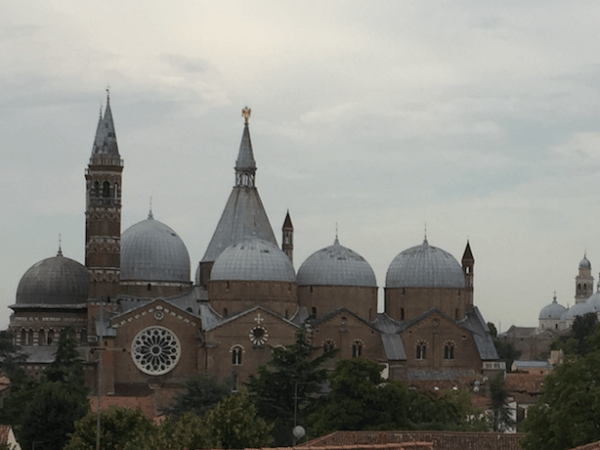
VISITING THE BASILICA OF SAINT ANTHONY IN PADOVA: A PERSONAL PILGRIMAGE
A deeply personal visit to the Basilica of Saint Anthony in Padova, blending faith, gratitude, and one unforgettable pilgrimage experience.

FERRAGOSTO IN ITALY: WHAT YOU NEED TO KNOW BEFORE TRAVELING IN AUGUST
Planning an August trip to Italy? Ferragosto is a national holiday that affects restaurants, stores, and local life. Learn how to plan your trip to enjoy the festivities and avoid surprises.
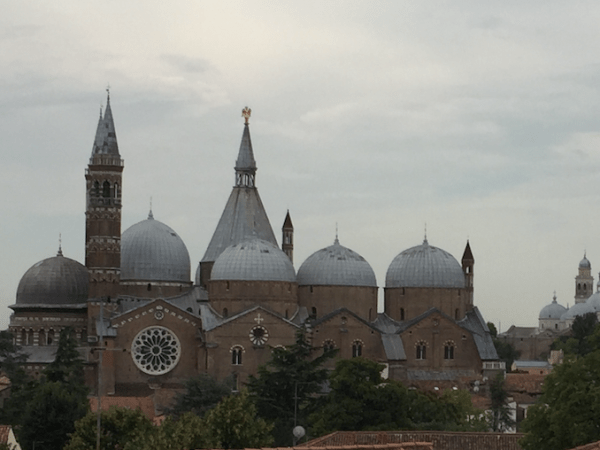
TOP 5 THINGS TO DO WHILE YOU’RE IN PADOVA, ITALY
Padova is a city where history and culture meet in every street and piazza. Whether you’re exploring ancient frescos, botanical gardens, or iconic landmarks, these are the top five experiences you shouldn’t miss during a short stay.
 TRIPPY TULIP