Venice for Short Visits, Smart Choices, and Real Expectations
Venice asks more of visitors than most cities.
It’s shaped by water, stairs, crowds, and timing—one that rewards people who slow down, pay attention, and make a few smart decisions early. When you do, Venice opens up. When you don’t, it can feel unnecessarily hard.
A short visit is often enough if you approach it with intention. Where you stay matters. When you eat matters. How much you expect to see in a single day matters. Venice doesn’t reward rushing or overplanning, but it does respond well to judgment.
This guide is for travelers who want to experience Venice clearly and enjoy it without friction. Not everything needs to be checked off. The goal is to move through the city well, notice what’s working, and leave feeling satisfied rather than spent.
VENICE AT A GLANCE
Best for
✦ Travelers who enjoy cities with strong personalities
✦ Visitors who don’t mind a bit of effort in exchange for atmosphere
✦ People who like to move slowly, notice details, and wander
Not ideal if
✦ You’re short on time and want things to feel easy
✦ You prefer wide sidewalks, clear routes, and efficiency
✦ Crowds quickly drain your energy
Ideal visit length
✦ One thoughtfully planned day for a first visit
✦ Two days if you’re staying just outside the historic center
✦ Longer stays work best when you settle into a daily rhythm
First-time reality check
✦ Venice is compact, but it asks a lot physically
✦ Luggage and wheeled bags change the experience
✦ Getting lost is part of the learning curve—and often the point
WHERE TO BASE YOURSELF
Where you stay has an outsized impact on how Venice feels.
Staying in the historic center can be memorable, but it comes with trade-offs—higher prices, heavier crowds, and the daily reality of navigating stairs and narrow walkways with everything you own. For some trips, that’s part of the appeal. For short visits, it can quietly drain your energy before the day even begins.
Basing yourself in a nearby city often makes more sense. Places like Padova or Mestre are well-connected by train, calmer at night, and far easier to move through with luggage. The ride into Venice is short, predictable, and removes a layer of friction that many first-time visitors don’t anticipate.
This approach lets Venice be the experience, not the obstacle course. You arrive with focus, spend your energy where it matters, and leave when the city starts to feel full rather than overwhelming.
HOW LONG YOU ACTUALLY NEED
Venice is often described as a place you could wander for days. That’s true—but it’s not the whole story.
For a first visit, one well-planned day is usually enough. The city is compact, and its major sights sit close together. With a thoughtful route and realistic expectations, you can see a lot without feeling rushed or depleted.
More time becomes valuable when you want to slow the pace. A second day makes room for quieter neighborhoods, longer meals, and the kind of wandering that isn’t attached to an agenda. Without that intention, extra days can start to feel repetitive, especially if crowds and logistics are already wearing on you.
The key isn’t duration—it’s energy. Venice rewards focused visits and measured ambition. Knowing when to arrive, when to leave, and when to sit still often matters more than how long you stay.
MOVING THROUGH VENICE
Venice is a walking city, and it makes that clear immediately.
Distances look short on a map, but stairs, bridges, and crowds add weight to every step. Comfortable shoes aren’t optional, and neither is a flexible mindset. Progress is rarely straight, and detours are part of how the city reveals itself.
You will get lost. Everyone does. Street signs appear and disappear, routes loop back on themselves, and what looks like a shortcut often isn’t. The sooner you stop resisting this, the easier Venice becomes. Wandering isn’t a mistake here—it’s the mechanism.
The trick is managing your energy. Pause often. Sit when you find a quiet edge of a canal. Let the city reset your pace instead of trying to impose your own. Venice moves slowly on purpose, and meeting it there is what keeps the experience enjoyable rather than exhausting.
EATING WITHOUT REGRET
Eating well in Venice is possible, but it requires a little restraint.
Restaurants clustered around major landmarks tend to prioritize volume over care. Menus are long, familiar, and designed to reassure tired tourists. Sometimes that’s fine. Often, it’s forgettable. Venice doesn’t owe anyone a great meal simply because they’ve arrived hungry.
Timing matters more than searching. Eating earlier or later than the peak rush improves your chances immediately. So does stepping just a few streets away from the busiest routes, where kitchens have more room to breathe and fewer tables to turn.
A light breakfast, a well-timed lunch, and a simple dinner often work better than chasing a perfect restaurant. Think in terms of rhythm, not rewards. In Venice, a meal that fits the day usually feels better than one that tries too hard.
WATER, WEATHER, & CROWDS
Venice operates on its own schedule, shaped by tides, weather, and sheer popularity.
High water, known as acqua alta, can temporarily flood parts of the city, especially during certain seasons and full moons. It’s rarely dangerous, but it can be inconvenient. Waterproof shoes or lightweight rain boots make a noticeable difference, and raised walkways usually appear when flooding is expected.
Crowds are part of the equation year-round, with peak pressure around mid-morning and early afternoon. Popular areas can feel dense and loud, but they thin out quickly once you step away from the main arteries. Early mornings and evenings offer the most breathing room.
The goal isn’t to avoid these realities—it’s to move with them. A little preparation and flexibility go a long way in Venice, turning what could feel chaotic into something manageable, even memorable.
NON-NEGOTIABLES
If your time in Venice is limited, a few experiences are worth prioritizing—not just because they’re iconic, but because they also help you understand the city.
✦ Be on the water at least once
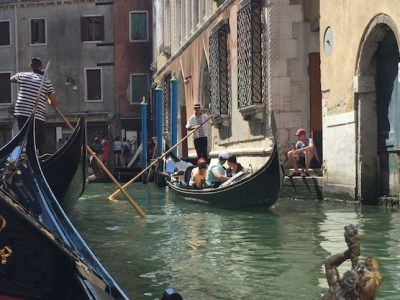
Whether that’s a gondola ride or a shorter traghetto crossing, seeing Venice from canal level matters. It slows the pace, shifts perspective, and makes the city’s design feel intentional rather than ornamental.
✦ Pass through St. Mark’s Square
It’s crowded, loud, and unavoidable. It’s also essential. You don’t need to linger, but walking through—ideally early or later in the day—helps anchor the rest of Venice around something real.
✦ Stand on the Rialto Bridge
Yes, it’s busy. Yes, it’s worth it. Watching boats move through the Grand Canal from above reveals the city’s daily choreography in a way few other places do.
✦ Choose one cultural stop
Murano’s glass history or a small mask shop near a quiet church both work. The goal isn’t depth—it’s texture. One focused stop rounds out the day without tipping it into overload.
Venice is a city that leaves an impression quickly. Its beauty, effort, and intensity arrive all at once, and they tend to linger.
The best way to leave isn’t by doing more—it’s by noticing when you’ve had enough. When your feet are tired, your head feels full, and the city still holds your interest, that’s a good moment to step away.
A short, well-paced visit often stays with you longer than a rushed attempt to see everything. Venice responds to attention and intention, not endurance. Leaving while the city still feels generous is part of experiencing it well.
Explore Venice further
TOP 5 VENICE TRAVEL TIPS: MAKE THE MOST OF LA SERENISSIMA
Venice is a city like no other, with winding canals, historic piazzas, and unique local customs. These five travel tips will help you navigate the city like a local and make the most of your time in La Serenissima.

5 MUST-DO EXPERIENCES IN VENICE FOR YOUR DAY TRIP
Venice is a city unlike any other, and even on a day trip, there are a few essential experiences you absolutely cannot miss. From historic bridges to unique museums, here’s how to make the most of your time in La Serenissima.
 TRIPPY TULIP