So you’ve landed in Italy—fabulous! You’ve probably already pictured yourself wandering cobblestone streets, sipping espresso by a canal, and pretending you know exactly what you’re doing. But now comes the practical part: how do you actually get from city to city?
Sure, you could rent a car. But if you’ve ever tried driving in a foreign country where you don’t speak the language—and where the street signs might as well be hieroglyphics—you already know that adventure might quickly turn into frustration.
That’s why most travelers in Italy rely on trains—they’re fast, frequent, comfortable, and (often) more pleasant than renting a car. Before you channel your inner Italian and start thinking you’ve got the whole Eurail thing mastered, here are some tips that will actually help you avoid rookie mistakes.
1️⃣ Not Every Train Station Sells Tickets On Site
In big cities like Rome, Florence, Milan, or Venice, you’ll find ticket counters and machines everywhere. But in smaller towns, the train station itself may not sell tickets at all. Instead, your options might be:
✦ A tobacco shop (Tabacchi)
✦ A newsstand (Edicola)
✦ A local cafe that doubles as a ticket vendor
Look for a sign that says “Biglietti”—that’s your clue you’re in the right place.
2️⃣ Buy Your Tickets Online in Advance
One of the easiest ways to travel stress‑free is to buy your tickets online before you go. Trenitalia and Italo are the two main providers for most city‑to‑city routes, and tickets can be cheaper if you book early.
Pro tip: screenshot your ticket if you don’t have a way to print it.
3️⃣ Upgrade If You Can—It’s Worth It
If Premium or Business Class is available for your train, it’s often worth the extra cost. You’ll usually get:
✦ More comfortable, cleaner seating
✦ More personal space
✦ Better luggage storage
✦ Sometimes even better security
On long train rides, comfort can make all the difference—especially if you’re traveling after a long flight or a full day of sightseeing.

4️⃣ Always Validate Your Ticket (Yes, It Really Matters)
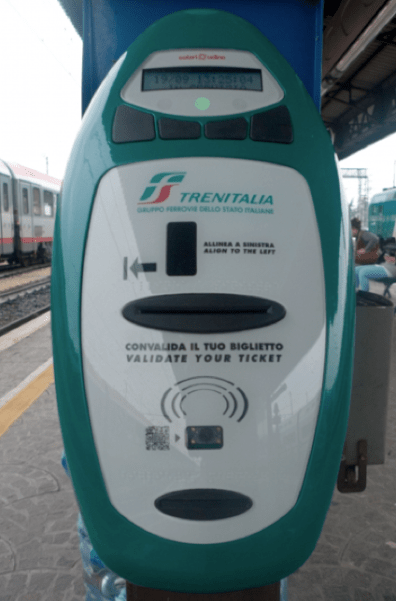
This is one of those travel rules people forget until it bites them. In Italy, you must validate your ticket before boarding—even if you bought it online or have a screenshot.
Here’s how it works:
✔ Look for the green validation machines on the platform
✔ Insert your physical ticket
✔ If you have a screenshot, hold your phone up to the validator screen and let it scan
If you skip this step, you could find yourself staring at a fine of up to €200—not the souvenir you want to take home.
5️⃣ Don’t Show Up Too Early (on Purpose)
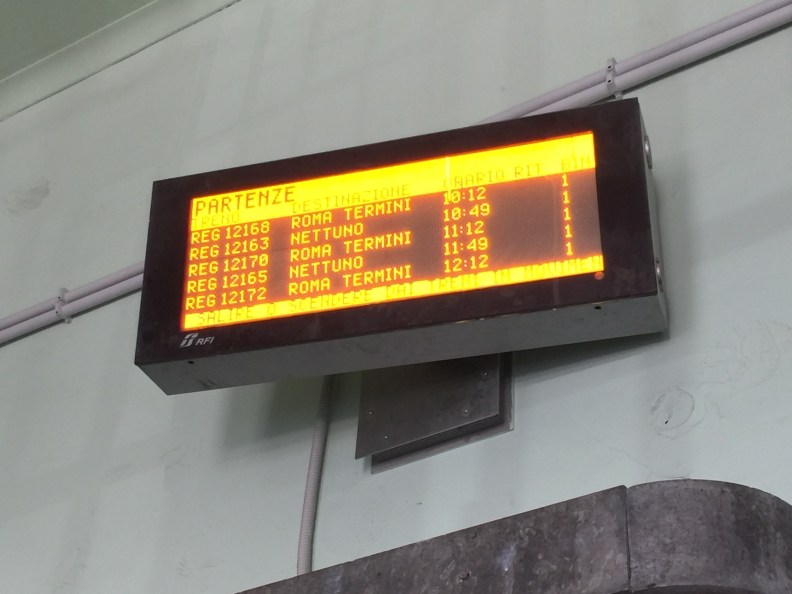
Here’s an Italian train quirk that comes straight from experience: train departure boards often aren’t posted until 10–15 minutes before the scheduled departure time. So you don’t need to show up at the platform an hour early if you already have your ticket.
That said, it’s smart to arrive with enough time to:
✦ Find your platform once it’s posted
✦ Validate your ticket
✦ Grab a coffee without running
Italian train stations move fast — but they move with purpose.
6️⃣ You Can Also Use Trains for Day Trips
Want to go from Florence to Pisa? Milan to Lake Como? Venice to Padua? Regional trains make these short hops incredibly easy (and often inexpensive). These tickets are frequently cheaper and don’t always require advanced reservations—but you still must validate them before boarding.
Traveling by train in Italy is one of the best ways to see the country—and it gets easier the more you do it. With a little prep, a few screenshots on your phone, and a quick validation habit, moving between Italian cities can feel effortless.
Italy’s trains are comfortable, frequent, and very Instagram‑worthy, and mastering them will give you more time to sip wine, wander cobblestone alleys, and soak up the beauty around every corner. 🍷🚆🇮🇹
 TRIPPY TULIP